Ever wondered why your digital art looks messy or not polished? Getting top-notch results often means telling the system what not to include.
Learning to exclude certain elements can help you avoid common mistakes. These tools are like digital erasers, removing unwanted parts. This way, every piece you create meets high standards of clarity and design.
Using negative prompts ai porn techniques is crucial, not just for hobbyists. It’s a necessary strategy for anyone aiming to improve their work. By mastering these recipes, you can control your final look, turning simple drafts into amazing, professional images.
Key Takeaways
- Exclusion filters are vital for removing unwanted visual noise.
- Refining your input leads to higher clarity and better composition.
- Mastering these techniques transforms raw drafts into professional work.
- These instructions act as essential quality control for your digital projects.
- Consistent use of filters ensures a distinct and polished final style.
Understanding the Role of Negative Prompts in AI Generation
Creating with AI is more than just using positive prompts. It’s about knowing how to use negative constraints. These tools are like creative guardrails that keep the model from showing unwanted things. By using negative prompts ai porn, you can remove unwanted elements and focus on what you want.
Why Negative Prompts Matter for Quality Control
Quality control is the main reason for using these constraints. Without them, AI models might produce low-quality images. By telling the system what not to do, you ensure it uses better data.
Think of these prompts as a filter that removes common artifacts before they appear. This keeps your images sharp and clear. Using negative prompts ai porn regularly makes a big difference in quality.
How AIPornDude Interprets Negative Constraints
When you give a negative constraint, the model uses it to remove unwanted patterns. It’s like a map that tells the system where not to go. This lets you control the final image precisely.
The table below shows how different prompts affect the generation process:
| Prompt Type | Primary Function | Impact on Output |
|---|---|---|
| Positive Prompt | Defines the subject | High influence on content |
| Negative Prompt | Excludes artifacts | High influence on quality |
| Weighting | Adjusts intensity | Fine-tunes the balance |
Knowing how negative prompts ai porn work helps you predict the outcome. By experimenting with these constraints, you can improve your workflow. This leads to consistent, high-quality images every time.
Essential Negative Prompts AI Porn Fundamentals
Learning about negative constraints is key to controlling your digital creations. Using negative prompts ai porn means telling the model what not to include. This method helps remove unwanted parts and focus on quality.
Defining the Core Negative Vocabulary
First, you need to know the basic words to avoid common mistakes. Precision is vital when telling the AI what to skip. Users often start by avoiding body errors and poor quality.
Words like “deformed,” “extra fingers,” and “blurry” are essential. Using these terms helps keep your work clean and high-quality. This negative prompts ai porn approach ensures your projects look great.
Structuring Your Negative Prompt Syntax
How you arrange your instructions affects the AI’s understanding. Place the most important exclusions first. This way, the AI focuses on these non-negotiable rules before considering other details.
Grouping related terms helps create a clear order. Use commas to separate keywords for better understanding. Here’s a table showing how to organize your negative constraints:
| Category | Primary Keywords | Impact Level |
|---|---|---|
| Anatomy | extra limbs, deformed, fused fingers | High |
| Quality | blurry, low resolution, pixelated | High |
| Composition | cluttered, distorted, watermark | Medium |
| Style | sketch, cartoon, oversaturated | Low |
Mastering negative prompts ai porn helps you achieve consistent quality. Regular syntax leads to fewer editing needs. Your aim is to guide the AI to create your vision accurately.
Setting Up Your AIPornDude Environment for Success
Creating high-quality AI images begins before you start typing. By focusing on your initial setup, you can avoid common mistakes. These aiporndude tips will help you build a solid base for your future projects.
Configuring Model Settings for Better Baseline Results
Start by fine-tuning your model parameters for a neutral base. If your settings are wrong, you might get oversaturated colors or harsh lighting. Adjusting these values early helps you control your images better.
Before running big batches, balance your sampling steps and guidance scale. A well-configured model is like a reliable canvas. It ensures your prompts have a clear effect. Consistency is key to avoid low-quality images.
Preparing Your Workspace for Prompt Testing
After setting up your model, organize your workspace for testing. Keep a log of your experiments to find the best results. This is a top aiporndude tip for saving time and resources.
Make a folder or document for your successful prompts. This way, you can see which changes work best. Methodical testing helps you reach your creative goals faster.
Common Artifacts and How to Fix AI Artifacts
Getting top-notch results needs a sharp eye for detail. Learning to fix ai artifacts in images can greatly boost your work’s quality.
These defects often show up as odd body parts or mixed-up textures. Spotting these problems early lets you tweak your prompts. This helps the model create cleaner, more realistic images.
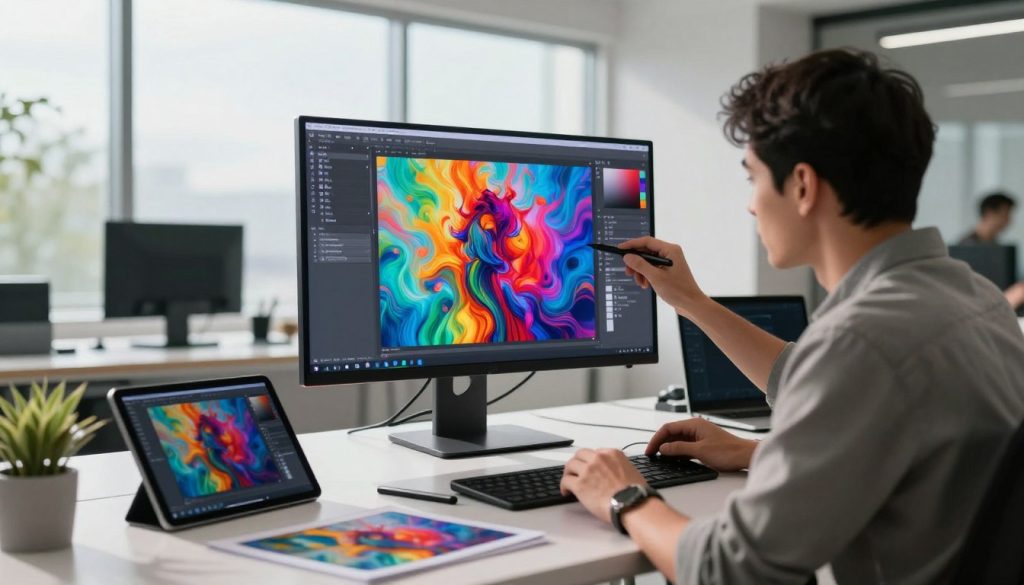
Identifying Distorted Limbs and Extra Digits
AI models sometimes get human anatomy wrong. You might see extra fingers, joined limbs, or odd joint shapes in your images.
To fix ai artifacts like these, add terms like “extra fingers,” “mutated hands,” or “deformed limbs” to your prompts. This tells the AI to focus on correct body shapes.
Removing Blurry or Low-Resolution Elements
At times, your image’s subject looks clear, but the background is fuzzy or pixelated. This can mess up your work’s look.
To fix ai artifacts related to image quality, include negative terms like “blurry,” “low quality,” or “out of focus.” These help the AI focus on sharp details and edges.
Techniques for Cleaning Up Background Noise
Background noise can pull your focus away from the main subject, making your image look messy. A clean background is key for a professional look in AI projects.
Use negative prompts like “cluttered background,” “distracting elements,” or “noisy textures” to clear the area. These tweaks help fix ai artifacts and keep your subject in the spotlight.
Crafting Your First Negative Prompt Recipe
A well-crafted negative prompt recipe acts as a filter. It makes sure your AI generations are clean and professional. By layering your instructions, you get more precision and control over the final output. This method is the best way to fix ai artifacts that often plague raw generations.
Step One: Establishing a Global Negative Baseline
Every successful project starts with a solid foundation. Begin by creating a global negative baseline for every image you generate. This baseline acts as a universal safety net for your workspace.
Include terms like “low quality, blurry, distorted” to ensure a clean start. These core terms help fix ai artifacts before they appear in your final render. By keeping this list consistent, you maintain high quality across all your creative sessions.
Step Two: Adding Subject-Specific Exclusions
After setting your baseline, refine your results with subject-specific exclusions. This involves adding more constraints that target your project’s unique needs. For portraits, exclude specific anatomical errors or unwanted background clutter.
This is like fine-tuning your creative vision. By isolating specific elements to avoid, you prevent common mistakes. This layered strategy ensures your generations are consistently clean and meet your specific goals.
Advanced Techniques for Refining Skin Texture and Anatomy
When your AI outputs look too artificial or anatomically incorrect, it’s time to refine your negative prompt strategy. Achieving high-fidelity results requires more than just a good base model. It demands precise control over how the engine interprets human features. By applying specific negative constraints, you can effectively fix ai artifacts that often plague generated characters.
Eliminating Unnatural Skin Smoothing
Many models default to a “porcelain” look that strips away essential skin texture. To combat this, add terms like “airbrushed,” “plastic skin,” or “oversmoothed” to your negative prompt list. This forces the AI to retain natural skin pores and imperfections, vital for a lifelike appearance.
Experiment with negative weights to find the perfect balance. If the skin still appears too flat, add “digital painting” or “smooth skin” to your exclusions. This simple adjustment helps fix ai artifacts related to texture quality.
Correcting Anatomical Inconsistencies
AI models often struggle with complex human anatomy, leading to issues like extra fingers or fused limbs. These errors occur because the model lacks a true understanding of skeletal structure. You must explicitly exclude these traits to guide the generation process toward more anatomically accurate results.
Use negative prompts such as “extra limbs,” “fused fingers,” or “malformed hands.” By clearly defining what you do not want, you provide the model with a boundary that prevents common structural failures. This is a crucial step to fix ai artifacts that ruin otherwise perfect compositions.
Managing Facial Feature Distortions
Facial symmetry is another area where AI frequently falters. Distorted eyes, misaligned mouths, or strange jawlines can quickly break the immersion of your project. To maintain facial integrity, include negative terms like “asymmetric eyes,” “crooked teeth,” or “distorted pupils.”
Focusing on these specific details ensures that your characters look natural and believable. Consistent application of these negative constraints will significantly improve your overall output quality. Always iterate on your prompts to see which specific terms yield the best results for your chosen model.
Managing Lighting and Composition with Negative Prompts
Creating the perfect scene with AI needs more than just a good prompt. By using aiporndude tips, you can control light and frame organization. This helps make your scenes look just right.
Preventing Overexposure and Harsh Shadows
Too much light can mess up skin and clothes, making them look washed out. To avoid this, add terms like “overexposed,” “blown-out highlights,” or “harsh lighting” to your prompts.
These terms help the AI avoid extreme brightness. This way, it chooses softer, more natural light. Your final images will look professional and balanced.
Avoiding Cluttered or Chaotic Compositions
A messy background can take away from your main subject. To keep things simple, use negative prompts like “cluttered background,” “messy room,” or “distracting elements.”
By excluding these, the AI focuses on your main subject. This makes your scenes look like they were shot in a studio. A well-composed scene is key for high-quality results every time.
Optimizing Style Consistency Using Negative NSFW Prompts
To have a uniform look in your AI projects, you need more than just positive prompts. You must set clear limits to keep your art on track. Using negative nsfw prompts helps you stick to your style and keep your content in line with your standards.
Maintaining Artistic Integrity Across Generations
Consistency is key in a professional portfolio. You want all your assets to look like they’re from the same world. But, style drift can happen when the AI surprises you, making images look out of place.
To fight this, set up core negative rules to keep your style in check. Here’s why it’s good to have strict negative rules:
- Visual Uniformity: Keeps lighting, color, and textures the same in all your work.
- Brand Alignment: Makes sure every piece fits your creative brief.
- Reduced Editing: Saves time by needing less fixing after creation.
“True creativity in AI generation is not just about what you include, but the discipline of what you choose to exclude.”
Filtering Out Unwanted Aesthetic Styles
The model might sometimes add styles that don’t match your vision. Whether it’s a painterly effect or a lighting style that doesn’t fit, you can block it. Using negative nsfw prompts is crucial to keep your content right and follow rules.
By telling the model what not to do, you can get better results. For example, if you want a sharp, clean look, add terms to block low-quality filters. This way, your work will always look polished for your audience.
By always using these filters, you keep full control over your art’s look. This is especially important for projects needing a consistent style across many pieces. Mastering these constraints will make your work much better.
Troubleshooting Common AIPornDude Tips and Errors
Even the most skilled creators sometimes face issues where their instructions seem to disappear. When your negative nsfw prompts don’t work as expected, it can be really frustrating. The first step to solving this problem is to understand how the model works.
Diagnosing Why Prompts Are Being Ignored
Commands ignored by the model often come from its training data bias. AI models learn from huge datasets, and sometimes these patterns are stronger than your specific rules. You might find that the model favors common visual themes over your custom rules.
Another reason could be the complexity of your instructions. If you give too many conflicting orders, the model might get confused. Making your negative nsfw prompts simpler can help the AI understand your requests better.
Adjusting Prompt Weights for Better Control
If simple commands don’t work, try adjusting prompt weights. By giving a higher number to your negative constraints, you tell the AI these are non-negotiable. This is key to overcoming model biases that keep showing up in your work.
Try different weight values to see how they affect your exclusions. Start with small changes and watch how the output changes. Learning to use negative nsfw prompts through weight adjustments helps ensure your images match your vision.
Testing and Iterating Your Negative Prompt Library
Creating a top-notch collection of negative nsfw prompts is not just about luck. It takes a structured approach to find the best visual results for your projects. Treat your prompt engineering as a series of experiments to improve your output over time.
Creating a Systematic Testing Workflow
Begin by isolating variables in your workflow. Generate many versions of a prompt with constant positive inputs. By changing negative nsfw prompts one at a time, you can see how each change affects the image.
First, create a baseline image without any negative constraints. Then, add your negative terms in small steps. This helps you pinpoint which phrases remove unwanted artifacts or styles.
Documenting Successful Recipe Combinations
It’s crucial to log your findings for long-term success. Save any successful combinations in a library. This avoids repeating mistakes and saves time in the future.
Organize your notes by subject or style for easy access. You might find that certain negative nsfw prompts are better for portraits but need tweaks for full-body shots. This organized approach turns trial-and-error into a professional system.
| Test Category | Primary Goal | Expected Outcome |
|---|---|---|
| Anatomy Fixes | Remove extra limbs | Improved structural integrity |
| Style Cleanup | Filter blurry textures | Sharper, clearer details |
| Lighting Control | Reduce harsh shadows | Balanced, natural exposure |
| Composition | Eliminate clutter | Clean, focused framing |
Best Practices for Maintaining High-Quality Outputs
To get consistent, top-notch results, you need a strict workflow. Improving your methods means every output meets your high standards. These aiporndude tips are key to success in your projects.
Balancing Positive and Negative Prompt Length
Improving your output starts with balancing your prompts. If your prompts are uneven, the AI might focus too much on one side. This can lead to unintended visual artifacts.
Make sure your positive and negative prompts are equally detailed. This balance helps the model understand your vision better. Using these aiporndude tips keeps your complex images under control.
Staying Updated with New Model Capabilities
The world of AI generation is always changing. Keeping up with updates is crucial for growth. New features can make your workflow easier or improve image quality.
Adapting to new technology keeps your work at the cutting edge. Being proactive ensures your results are professional and stand out. Remember, being flexible is essential for mastering these advanced generation techniques.
Conclusion
Getting precise control over digital creations needs a deep understanding of negative constraints. Mastering these prompts lets you shape complex visuals with great accuracy. You now have the tools to remove unwanted artifacts and boost your artistic standards.
Using these aiporndude tips can greatly improve your creative process. You can go beyond basic generation and create professional-grade images that match your vision. The best way to get better is through consistent practice.
Trying new things is key to progress in AI art. Keep experimenting with different exclusions to see their effects on your work. These aiporndude tips are a starting point for your ongoing growth in this field.
Your path to perfect generation is ongoing. Stay curious about new model updates and adjust your recipes accordingly. Your dedication will make your work stand out with clarity and technical skill.